
Pipeline Heater
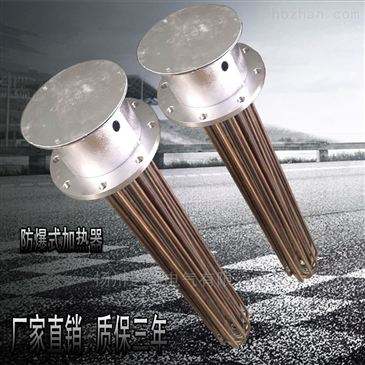
A pipeline heater (also known as an inline heater) is an electric heating device used in industrial production for instant heating of gas or liquid media flowing through pipelines. Its core function is to convert electrical energy into thermal energy to achieve medium heating, freeze protection and insulation, viscosity adjustment, or process temperature maintenance. Compared with traditional steam heating, its thermal efficiency can reach over 95%, with fast heating, precise temperature control, and convenient installation. It is widely used in chemicals, petroleum, electric power, new energy, food and pharmaceutical, and other fields.
I. Core Structure and Working Principle
A pipeline heater mainly consists of five parts: the cylinder body, tubular electric heating elements, baffle plates, insulation layer, and temperature control system.
Heating principle: Based on the Joule heating effect, current passes through a high-resistivity alloy resistance wire (nickel-chromium/iron-chromium-aluminum alloy) to generate heat, which is conducted through a crystalline magnesium oxide powder insulating and thermally conductive layer to the metal sheath wall, and then transferred from the tube wall to the medium flowing through it.
Flow-guiding design: Baffle plates are welded inside the cylinder body to force the medium to flow along a zigzag path, fully contacting the heating surface, avoiding short-circuiting or flow bias, and ensuring uniform heating.
Temperature control system: A K-type thermocouple or PT100 temperature sensor is installed at the outlet, combined with a PID controller and solid-state relay to achieve closed-loop temperature control, with temperature error controllable within ±0.8℃~±1℃.
II. Main Types and Applicable Scenarios
Type Applicable Medium Typical Temperature Range Core Features
Liquid pipeline heater Water, thermal oil, heavy oil, acid-base solutions 0~350℃ (some can reach 850℃) Flange installation, pressure-bearing 1.0~8MPa, dry-burn protection required
Gas pipeline heater Air, nitrogen, natural gas 0~1050℃ Large flow rate, flow velocity and pressure loss need to be considered
Explosion-proof pipeline heater Flammable and explosive media (chemicals/oil and gas) Depends on medium Explosion-proof grade Ex d IIB T4~Ex d IIC T6, overall explosion-proof structure
Sanitary-grade pipeline heater Food and pharmaceutical clean media 0~200℃ 316L stainless steel mirror polishing, dead-corner-free design
III. Core Points for Model Selection
1. Power calculation (primary parameter)
Power selection directly determines the heating effect and must be accurately calculated according to medium type, flow rate, and temperature difference:
Liquid medium: Power (kW) = mass flow rate (kg/h) × specific heat capacity (kJ/(kg·℃)) × temperature difference (℃) ÷ 3600 ÷ thermal efficiency (0.9~0.95)
Specific heat capacity of water is taken as 4.2, and thermal oil as 2.1
Gas medium: Power (kW) = volumetric flow rate (m³/h) × density (1.2kg/m³) × specific heat capacity (1.005) × temperature difference ÷ 3600 ÷ thermal efficiency (0.8~0.9)
Power margin correction:
Reserve 10% for intermittent operation, and 20% for 24-hour continuous operation
Reserve 30% for northern outdoor or high-heat-dissipation scenarios without insulation
Add 20% heat loss compensation for outdoor exposed pipelines
2. Material selection (according to medium corrosiveness)
Conventional clean water/HVAC: 304 stainless steel is sufficient
Food and pharmaceutical/chloride-containing water: 316L stainless steel
Strong acids and bases/seawater: titanium alloy or duplex steel
High-temperature gas: Incoloy alloy or 310S stainless steel
3. Surface load (anti-scaling and service life)
Oil heating: ≤0.7 W/cm² to prevent local overheating and carbon formation
Water heating: 5~8 W/cm²
Gas heating: can be slightly higher, but generally ≤3 W/cm²
4. Safety protection (must be standard equipment)
No-flow protection: The flow switch is interlocked with the heating power supply to automatically cut off heating when the medium is interrupted, completely preventing dry burning
Over-temperature protection: Independent temperature control probe forcibly cuts off power when the temperature exceeds the limit
Overload/leakage protection: Prevents electrical faults
Explosion-proof design: Explosion-proof models must be selected for flammable and explosive working conditions, and explosion-proof qualification certificates must be requested
5. Structure and installation
Flange type: Most commonly used, convenient for disassembly and assembly, no need to modify pipelines
Modular design: A single heating tube can be replaced individually, reducing operation and maintenance costs
Insulation layer: Thickened high-density insulation ensures the outer shell temperature ≤50℃, saving more than 20% energy
IV. Local Manufacturer Resources (Yangzhou and Surrounding Areas)
Jiangsu is an important industrial cluster for electric heating equipment in China, with many manufacturers in Yangzhou and surrounding areas. The following can be used as references for model selection:
Zhenjiang Kaitong Electric Co., Ltd. (Youfang Town, Yangzhong City, adjacent to Yangzhou): Mainly engaged in pipeline heaters, flange heaters, air duct heaters, thermal oil heaters, etc. Its product line covers various specifications from 5KW to 80KW and supports stainless steel/explosion-proof customization.
Jiangsu Yongan Electric Heating Equipment Co., Ltd. (Yancheng, about 1.5 hours' drive from Yangzhou): Specializes in producing pipeline heaters, air duct heaters, thermal oil furnaces, and explosion-proof electric heaters, providing full-process services from model selection and customization to on-site commissioning, with rich cases in chemicals, coating, and HVAC fields.
Yancheng Shuanghong Electric Heating Technology Co., Ltd.: Professionally designs and manufactures non-standard ordinary/high-performance/high-power electric heaters of various types. Its products include pipeline heaters, air duct heaters, flange heaters, thermal oil furnaces, etc., widely used in petroleum, chemical, textile, pharmaceutical, and other industries.
Yancheng Xuanyuan Heating Equipment Technology Co., Ltd.: Has A2 pressure vessel manufacturing qualification and CE/RoHS certification. It mainly produces vertical/explosion-proof pipeline electric heaters, thermal oil heaters, large heating platforms, etc., and has non-standard customization and mass production capabilities.
Dongfang Electric Heating (a listed company in Zhenjiang): A well-known enterprise in China's electric heating industry and a drafting unit for industrial electric heating industry standards. It provides standardized pipeline heaters and customization services, with more than 100 technical reserves, and has passed CQC/CE/VDE/UL and ATEX explosion-proof certifications.
Nearby manufacturers: Yancheng and Zhenjiang areas gather a large number of electric heating equipment manufacturers, such as Jiangsu Yanyan Machinery, Jiangsu Zhongzhong Electric Heating, Yancheng Hongxingyuan Electric Heating, etc. All provide pipeline heater customization services, with short delivery cycles and fast after-sales response.
V. Usage Precautions
Startup sequence: First introduce the medium, then energize for heating; first cut off power, then stop the medium. Before startup, confirm that the circulation pump is operating normally and that the medium flow rate reaches more than 80% of the rated value.
Insulation test: Before startup, use a megohmmeter to measure the insulation resistance, generally not lower than 2MΩ. If it is below the standard, dry it before energizing.
Reliable grounding: The equipment must be reliably grounded. The control cabinet should be placed in a dry and ventilated place, and a rain cover should be installed for outdoor use.
Regular descaling: For liquid heating, check the scaling on the heating tube surface every 1~3 months. If the water is hard, it is recommended to install a water softening device.
Winter freeze protection: When shutting down outdoors, drain the residual liquid in the tube to prevent freezing and cracking.
Wiring verification: Check whether the power supply voltage matches the rated voltage of the heating tube (220V single-phase or 380V three-phase). It is strictly prohibited to connect 220V elements to a 380V power supply.