
304 Stainless Steel Explosion-Proof Flange Heating Tube Electric Boiler Water Tank Heating Tube Thermal Oil Furnace Heater
The "304 stainless steel explosion-proof flange heating tube, electric boiler water tank heating tube, and thermal oil furnace heater" you mentioned cover the core heating elements and complete equipment in the industrial electric heating field. These devices are widely used in industries such as chemical, petroleum, food, and machinery for heating and maintaining the temperature of liquids or gases. The following is a detailed analysis of the core technical features, structural principles, and application selection guides for each type of product:
I. Core Product Technology and Application Analysis
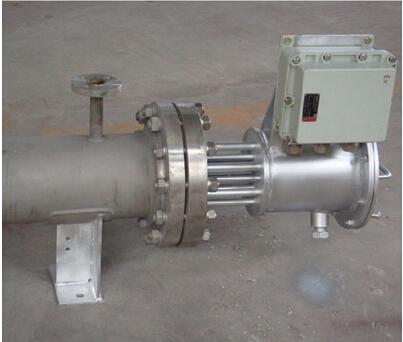
1. 304 Stainless Steel Explosion-Proof Flange Heating Tube
Structure and Material: It adopts a flange connection method, welding multiple U-shaped tubular electric heating elements onto a flange plate to form a centralized heating device. It typically uses 304 stainless steel material, which can be upgraded to 316L material in highly corrosive environments.
Explosion-Proof and Safety Features: The explosion-proof heating tube is composed of an explosion-proof heating tube and an explosion-proof junction box, with an explosion-proof rating up to ExdIIBT4-CT2. It is widely applicable to flammable and explosive places such as chemical, military, petroleum, and natural gas industries. It is equipped with over-temperature and low-liquid-level interlock protection devices, which immediately cut off the power supply in case of abnormalities to ensure operational safety.
Application Scenarios: Mainly used for heating and maintaining the temperature of materials in storage tanks, containers, and reactors in the petroleum, chemical, food, and machinery industries. It supports flange or threaded end-face sealing connections.
2. Electric Boiler Water Tank Heating Tube
Working Principle: It mainly operates through two methods: resistance heating and electromagnetic induction heating. In resistance-type heating tubes, high-temperature resistance wires are evenly distributed inside seamless stainless steel tubes, with the gaps filled with crystalline magnesium oxide powder that has good thermal conductivity and insulation properties, achieving a thermal efficiency of up to 98%.
Electrical Safety: The electrical characteristic of boiler heating tubes is that the water in the boiler is not electrified. However, to prevent water from becoming electrified due to leakage or rupture of the heating tube, leakage protection devices must be installed in the electrical circuit (leakage current is typically required to be no more than 0.5mA).
Application Scenarios: As the heart of electric boilers, it is mainly used for heat supply in industries such as chemical, plastic machinery, and pharmaceutical, as well as for preheating and constant temperature heating of water in various large water tanks and boilers.
3. Thermal Oil Furnace Heater (Electric Heating Thermal Oil Furnace)
Working Principle: The electric heater is directly inserted into the organic carrier (thermal oil) for direct heating, and a circulating oil pump is used to force the thermal oil to undergo liquid-phase circulation, transferring heat to the heat-using equipment and then returning to the heater for reheating, forming a complete circulation system.
Performance Advantages: It has the working characteristic of "low pressure and high temperature," capable of achieving working temperatures up to 280°C or even 320°C at a lower operating pressure (≤0.3MPa). The temperature control accuracy is extremely high (up to ±1°C), and it replaces coal with electricity, making it environmentally friendly and pollution-free.
Application Scenarios: Widely used in the plastics and rubber industry (hot pressing, vulcanization molding), petroleum and chemical industry (polymerization, distillation, forced insulation), oil and fat industry, and textile printing and dyeing fields.
II. Differences Between Flange Heating Tubes and Ordinary Heating Tubes
In industrial selection, there are essential differences between flange heating tubes and ordinary heating tubes:
Flange Electric Heating Tube: It belongs to "industrial-grade" equipment, with power up to hundreds of kilowatts, multiple tubes integrated and directly contacting the medium, with thermal efficiency above 90%. Its flange connection can withstand high pressure (10-50bar) and vibration environments, making it suitable for high-temperature and high-pressure extreme conditions in closed containers.
Ordinary Heating Tube: It belongs to "civil-grade" or light industrial grade, with power mostly below 50KW, flexible installation (such as threaded or insertion type), but weaker sealing performance, more suitable for low-pressure or open environments (such as household water heaters, small ovens).
III. Selection and Procurement Suggestions
Clarify the Heating Medium: Different media have different material requirements. For example, for heating water or general liquids, 304 stainless steel can be selected; if the medium is highly corrosive, advanced alloy materials such as 316L or even Incoloy800 must be used.
Confirm Explosion-Proof Requirements: If the equipment is installed in an area with flammable and explosive gases, be sure to confirm the equipment's explosion-proof rating (such as ExdIIBT4) and require the manufacturer to provide national explosion-proof certification qualifications.
Pay Attention to Safety Interlock Systems: High-quality industrial heaters must be equipped with a complete closed-loop feedback system, including PID temperature controllers, over-temperature alarms, low liquid level/oil shortage alarms, overpressure alarms, and automatic power-off functions to prevent dry burning or medium carbonization.
Inspect Manufacturer Qualifications: Especially when purchasing thermal oil furnaces, as they are special equipment, the manufacturer must possess the "Special Equipment Manufacturing License" issued by the General Administration of Quality Supervision. At the same time, it is recommended to choose source manufacturers with customized design capabilities, thermal calculation, and complete skid-mounted solution capabilities.