
Tubular Electric Heater
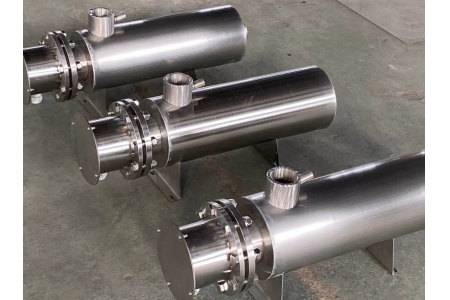
Tubular electric heater, also often referred to as tubular electric heating element or electric heating tube, is a widely used resistance-type heating device. Its core principle is the Joule heating effect: when current passes through the internal resistance heating wire, electrical energy is converted into thermal energy, which is then rapidly and uniformly transferred to the metal sheath through highly thermally conductive and insulating filling materials, ultimately heating the surrounding air, liquid, or solid medium.
Core Structure and Materials
The structure of a tubular electric heater is robust and efficient, mainly consisting of the following parts:
Metal sheath tube: As the outer shell and terminal for heat conduction, materials such as stainless steel (e.g., 304, 316L, 310S), copper, aluminum, titanium, or low-carbon steel can be selected based on the heating medium and temperature requirements.
Resistance heating wire: The core heating element, usually uniformly distributed along the central axis inside the tube. Common materials are nickel-chromium alloy wire (Ni-Cr) or iron-chromium-aluminum alloy wire (Fe-Cr-Al).
Insulating filler: The gap between the heating wire and the sheath tube is tightly filled with crystalline magnesium oxide powder (MgO). It possesses both excellent thermal conductivity and insulation, and is key to ensuring the safe and efficient operation of the heater.
Sealing and lead-out rods: Both ends of the tube are sealed with materials such as silicone, epoxy resin, or glass to prevent moisture and contaminants from entering. Lead-out rods are used to connect to an external power supply, and are typically made of stainless steel or free-cutting iron.
Main Types and Characteristics
Depending on the shape and application requirements, tubular electric heaters come in various forms, and their performance can be enhanced through special processes.
Table
Download as Table
Export as Image
Type Features and Advantages Typical Application Scenarios
Conventional Tubular Heater Simple structure, low cost, high mechanical strength, high thermal efficiency, safe and reliable. Water heaters, ovens, oil tanks, water tanks, air heating furnaces
Sheathed Cable Heater Slender and flexible shape, can be bent arbitrarily; extremely high mechanical strength, good pressure resistance; uniform heating, high insulation strength, longer service life. Complex molds, vacuum electric furnaces, large drying rooms, pipeline heat tracing, spot heating
Sheathed cable heaters represent a significant technological advancement over conventional tubular heaters. By repeatedly drawing, reducing, and annealing the heating wire, magnesium oxide powder, and metal sheath into a compact solid structure, they achieve comprehensive improvements in flexibility, insulation, uniformity, and reliability.
Wide Application Fields
With its excellent performance, tubular electric heaters are almost ubiquitous in all industrial and domestic fields requiring heating:
Household appliances: Water heaters, coffee makers, ovens, electric irons, etc.
Industrial equipment: Various saltpeter tanks, oil tanks, acid-alkali tanks, air heating furnaces, drying ovens, hot press molds, fusible metal melting furnaces, etc.
Industry coverage: Widely used in petroleum, chemical, textile, food, pharmaceutical, plastics, machinery manufacturing, automotive, marine, aviation, and many other industries.
To ensure safety and extend service life, special attention should be paid during use:
No dry burning: Unless specifically designed for dry burning, elements for heating liquids must never be operated without being immersed in the liquid or solid medium, as this will cause rapid burnout.
Reduced voltage start-up: When heating solid media such as nitrate salts, alkalis, asphalt, or paraffin wax, the voltage must first be reduced, and only after complete melting can it be raised to the rated voltage.
Environmental requirements: The relative humidity of the working environment should not exceed 95%, and there should be no explosive or corrosive gases.
Proper wiring: The wiring part should be placed outside the insulation layer, avoiding contact with water, corrosive or explosive media, and ensuring effective grounding of the sheath.
Regular maintenance: If scale or carbon deposits are found on the tube surface, they should be removed promptly to avoid affecting heat dissipation and shortening service life.
Compliant selection: Products should comply with relevant national and industry standards, such as JB/T 2379 "Metal Tubular Electric Heating Elements", GB 4706.1 "Safety of Household and Similar Electrical Appliances", etc. For specific products like water heaters, they should also meet dedicated standards such as GB/T 23150.