
Tubular Electric Heater
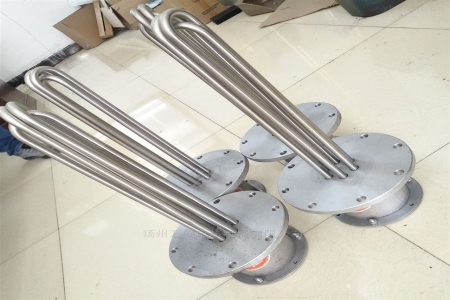
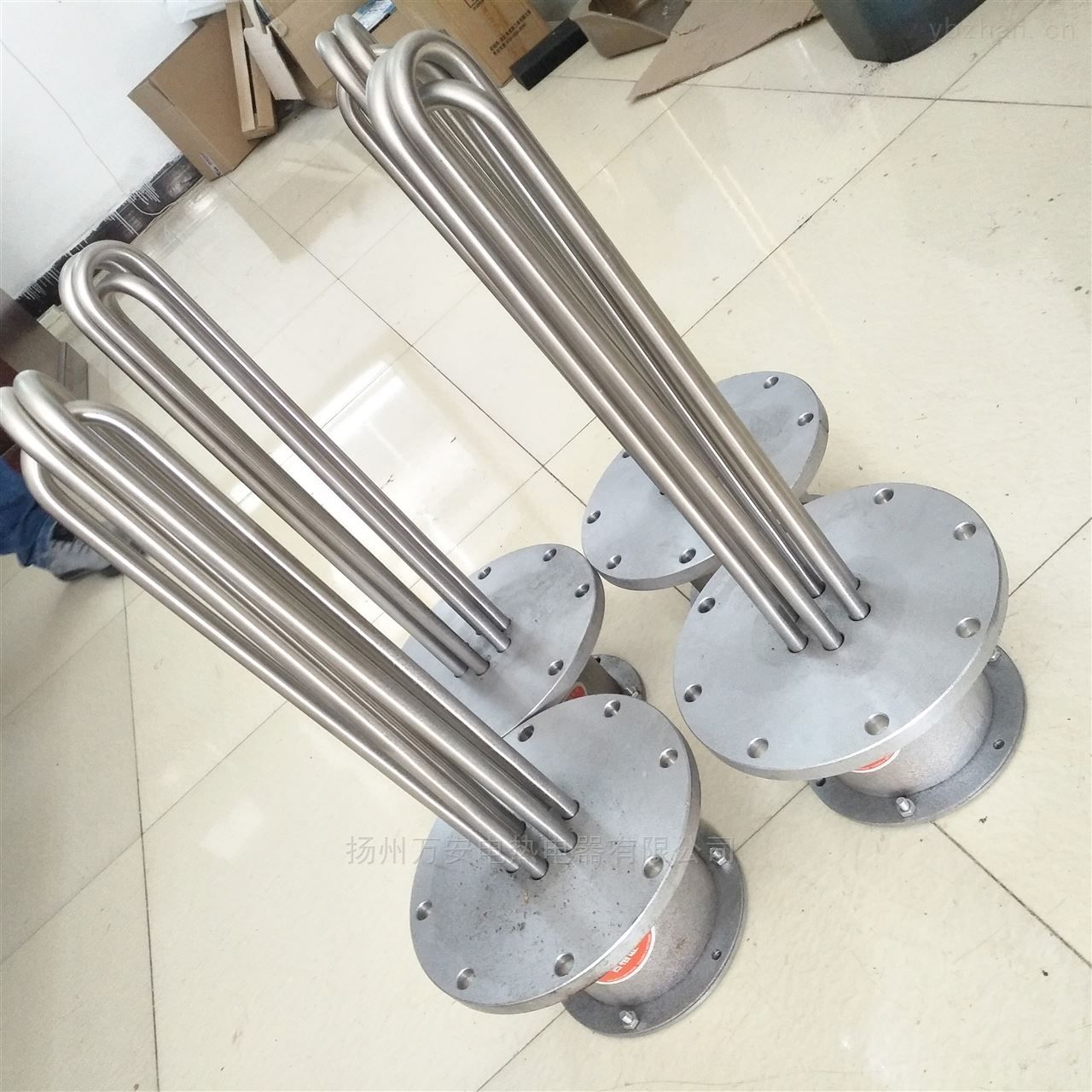
A tubular electric heater (also known as tubular heating element or electric heating tube, English: Tubular Heater / Sheathed Heating Element) is a resistive electric heating device that converts electrical energy into thermal energy. It is one of the most widely used heating elements, commonly applied to heat liquids, gases, metal molds, and chemical media, covering numerous fields such as household appliances, industrial equipment, commercial equipment, and laboratory equipment.
Working Principle
Tubular electric heaters operate based on Joule's law: when current passes through the spiral resistance wire inside the tube, Joule heat is generated. The heat is radially conducted through the filled insulating and thermally conductive medium (magnesium oxide powder) to the surface of the metal sheath, and then transferred to the external medium via conduction, radiation, or convection.
The calculation formula for electrothermal conversion is:
Q = 0.2388 · I²Rt or Q = 0.2388 · Pt
Where Q is heat (calories), I is current (A), R is resistance (Ω), t is time (s), and P is power (W).
Core Structure
Tubular electric heaters adopt a three-layer coaxial structure of "resistance wire - insulation layer - metal sheath," from the inside out:
Resistance heating wire: Located at the center of the tube, spirally distributed, made of nickel-chromium alloy (Cr20Ni80, temperature resistance up to 1400°C) or iron-chromium-aluminum alloy (0Cr25Al5, temperature resistance up to 1200°C)
Insulating filler: Crystalline magnesium oxide powder (MgO) filled between the heating wire and the metal tube, possessing high-temperature resistance (above 1000°C), high insulation (breakdown voltage ≥500V), and high thermal conductivity (thermal conductivity ≥3.5W/m·K). After tube reduction process, the density reaches above 3.3g/cm³
Metal sheath tube: Serves as the outer shell, providing mechanical support, corrosion protection, and heat transfer. The tube diameter is typically φ6~φ30mm
Lead-out rod/terminal: Connects the heating wire to the external power supply, made of copper or stainless steel, with nickel plating on the surface to prevent oxidation
Sealing material: Both ends of the tube are sealed with silicone, ceramic adhesive, or silicone rubber to prevent moisture ingress
Main Types
According to different shapes and structures, tubular electric heaters can be divided into:
Table
Download as Table
Export as Image
Type Structural Features Typical Applications
Straight Single-End Heating Tube Single-side lead-out, compact structure Small containers, mold heating
Straight Double-End Heating Tube Double-side lead-out, uniform power distribution Water tanks, oil tanks heating
U-Shaped Heating Tube Bent into U shape, increasing heating area Water heaters, boilers
W-Shaped Heating Tube Multiple bends, larger heating area Large containers, ovens
Spiral Heating Tube Spiral winding, maximizing heat dissipation area Showers, water dispensers, dishwashers
Custom-Shaped Heating Tube Customized bending shapes according to requirements Special equipment, molds
In addition, according to manufacturing processes, they can be further classified into conventional tube-reduced type and mineral-insulated cable type:
Conventional tube-reduced type: After inserting the heating wire and magnesium oxide powder into the outer tube, it is reduced and compacted, then heat-treated for shaping. This is the most common type.
Mineral-insulated cable type: Borrowing from mineral-insulated thermocouple technology, it undergoes repeated drawing, diameter reduction, and annealing to form a dense solid. The diameter can be as small as φ1mm, and the length can reach 60 meters. It has excellent flexibility and can be bent arbitrarily like a cable. The insulation resistance can reach 1000MΩ (20 times higher than conventional type), and it can withstand external pressure below 64MPa.
Key Technical Parameters
Table
Download as Table
Export as Image
Parameter Typical Range
Rated Voltage 220V / 380V
Rated Power 1kW ~ 6000kW (single unit)
Maximum Working Temperature 720°C (conventional), mineral-insulated type can reach above 2000°C
Tube Diameter Range φ6mm ~ φ30mm (mineral-insulated type φ1~φ6mm)
Sheath Material Stainless steel 304/316L, Incoloy 800/840, titanium alloy, copper, aluminum, low-carbon steel
Heating Wire Material Ni-Cr wire (Cr20Ni80), Fe-Cr-Al wire (0Cr25Al5)
Insulating Filler Crystalline magnesium oxide powder (high-temperature powder / medium-temperature powder)
Sealing Material Epoxy resin, silicone, glass
Electrothermal Conversion Efficiency ≥98%
Surface Power Load 1.2 ~ 3.8W/cm²
Explosion-proof Rating Up to Ex db IIC T1-T6 Gb
Protection Rating IP54 ~ IP65
Service Life Conventional 10000~50000 hours
Core Features
High thermal efficiency: Electrothermal conversion efficiency can reach above 98%, with electrical energy conversion rate exceeding 95%, and heat is concentrated for heating.
Simple structure, low cost: Mature manufacturing process, compact structure, easy installation.
High mechanical strength: Metal sheath provides good protection, and mineral-insulated type can withstand high pressure.
Strong adaptability: Can be used for heating various media such as liquids, gases, and solids, with corrosion resistance and high-temperature resistance.
Safe and reliable: Magnesium oxide powder provides both insulation and thermal conductivity, with multiple safety guarantees.
Flexible shapes: Can be processed into straight, U-shaped, W-shaped, spiral, and various custom shapes to meet different installation requirements.
Significant energy saving: Compared with traditional steam or hot water heating methods, energy costs are lower.
Typical Application Scenarios
Household appliances: Water heaters, ovens, coffee makers, water dispensers, dishwashers, water boilers, etc.
Petrochemical industry: Heating and raising temperature of hydrocarbons such as crude oil, heavy oil, fuel oil, heat transfer oil, and lubricating oil.
Industrial heating: Heating of reactor jackets and coils, heating of high-viscosity fluids and corrosive media.
Food processing: Tunnel-type food drying, aseptic packaging heat sealing, dairy sterilization conveying, continuous frying (160~190°C).
Plastic processing: Zone heating of injection molding machine barrels and molds (above 200~300°C).
New energy: Sintering furnaces for lithium battery cathode materials, preheating of hydrogen energy electrolyzers.
Semiconductor manufacturing: Vacuum CVD/PVD reaction chambers, heating plates for lithography machines.
Marine supporting: Preheating of fuel oil/lubricating oil in engine rooms and oil tanks, thermal insulation of cargo oil tanks.
Heating and HVAC: Hot water circulation in high-rise buildings, anti-freezing of solar pipelines, air conditioning heating.
Scientific research and experiments: Vacuum electric furnaces, test electric furnaces, thermal loads for space simulation chambers.
Usage and Maintenance Precautions
When melting solid oils (such as asphalt, paraffin), reduce the voltage for use, and then raise to the rated voltage after melting to prevent heat concentration from reducing the element's lifespan.
Carbon deposit treatment on surface: If carbon deposits are found on the tube surface, they must be completely removed before reuse to avoid reducing efficiency or even burning out the element.
Storage requirements: Elements should be stored in a dry place. If the insulation resistance drops below 1 megohm due to long-term storage, dry them in an oven at about 200°C for several hours or apply low voltage for several hours to restore insulation resistance.
Surface load control: Reasonably select the surface power load according to the medium type to avoid premature failure of the element due to excessive load.
Regular inspection: Regularly check insulation resistance and terminal status to ensure safety and reliability.
Executive Standards
JB/T 2379-1993: Metallic tubular heating elements
JB/T 4088-1999: Daily-use tubular heating elements
JB/T 12233-2015: Mineral-insulated electric heaters
GB/T 23150-2024: Tubular heaters for water heaters (implemented from April 1, 2025)
GB/T 8623-1988: Metallic tubular far-infrared radiation heaters
CB/T 3869-1999: Marine oil-water separator - Technical conditions for tubular electric heaters
GB 4706.1-1998: General safety requirements for household and similar electrical appliances