
Tubular Electric Heater
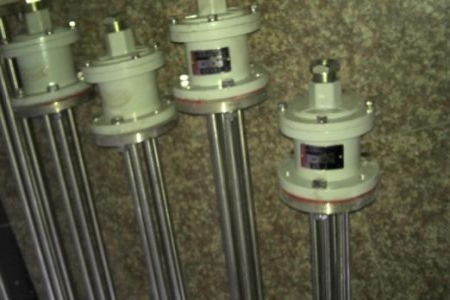
A tubular electric heater (scientific name "tubular electric heating element", commonly known as electric heating tube or heating rod) is a resistive electric heating device that converts electrical energy into thermal energy, and is one of the most widely used heating elements in industrial heating and household appliances.
The tubular electric heater operates based on the Joule heating effect: when current passes through the spiral resistance wire inside the tube, heat is generated, which is then conducted through the filled insulating and thermally conductive medium (magnesium oxide powder) to the surface of the metal sheath, and then heats the external medium (air, liquid, or metal mold) through conduction, radiation, or convection.
The specific heat transfer path is: resistance wire generates heat → magnesium oxide powder conducts heat and insulates → metal sheath surface → heated medium.
A tubular electric heater consists of the following core components:
Metal sheath tube: serves as the outer shell, providing mechanical support, corrosion protection, and heat transfer. The tube diameter is typically φ6~φ30mm. Materials include 304/316L/310S stainless steel, In800/In840 heat-resistant alloys, copper, aluminum, low-carbon steel, titanium alloys, etc.
Heating wire: a spiral resistance wire uniformly distributed along the axial center of the tube, made of nickel-chromium alloy wire (Cr20Ni80, withstanding about 1400°C) or iron-chromium-aluminum alloy wire (0Cr25Al5, withstanding about 1200°C).
Magnesium oxide powder (MgO): filled in the gap between the heating wire and the metal tube, possessing high-temperature resistance (above 1000°C), high insulation (breakdown voltage ≥500V), and high thermal conductivity (thermal conductivity ≥3.5W/m·K). After tube shrinking process, the density reaches above 3.3g/cm³, ensuring the heating wire is centered and does not touch the wall.
Lead-out rod/terminal: connects the heating wire to the external power supply, made of copper or stainless steel, with nickel plating on the surface to prevent oxidation. When the surface temperature of the element exceeds 450°C, brass lead-out rods are prohibited (zinc will volatilize).
Sealing material: both ends of the tube are sealed with silicone, ceramic adhesive, or silicone rubber to prevent moisture ingress.
Insulator: used to fix and insulate the lead-out rods.
Classification by shape:
Table
Download as table
Export as image
Type Features Application Scenarios
Straight single-end heating tube Single-end lead-out, can be inserted into mold holes Mold heating, plastic machinery
Straight double-end heating tube Double-end lead-out, simple structure Water tanks, oil tanks, and other general heating
U-shaped/W-shaped heating tube Bent to increase heat exchange area Immersion liquid heating
Spiral heating tube Spiral winding, compact and efficient Pipe tracing, circulating heating
Finned heating tube Fins added to the outer surface to expand heat dissipation area Air heating, ovens, warm air
Custom-shaped heating tube Bent shape customized according to installation space Special equipment, confined spaces
Classification by structure/lead-out method:
A-type: standard double-end lead-out
C-type: single-end parallel lead-out
D-type: single-end coaxial lead-out
Embedded element: directly embedded into equipment
Classification by medium used:
Liquid heating type: water, oil, chemical solutions, etc.
Dry-burning type (air heating): finned type, used in ovens, air heaters, etc.
Metal heating type: used for mold temperature control, melting low-melting-point metals
High efficiency and energy saving: electrical energy conversion rate exceeds 95%, with minimal heat loss
Simple structure: integrated design, small size, high mechanical strength
Safe and reliable: magnesium oxide insulation layer withstands high voltage (>1500V), surface is not electrified, preventing leakage
Uniform heating: spiral resistance wire is evenly distributed, ensuring consistent tube surface temperature
Long service life: designed service life generally exceeds 10,000 hours (oxidation-resistant materials can work stably for 5,000~10,000 hours)
Easy installation: supports threaded connection, flange connection, and fastener installation
Maximum working temperature: up to 850°C
Table
Download as table
Export as image
Parameter Description
Voltage specifications 12V, 24V, 36V, 48V, 110V, 220V, 380V, etc.
Power range Single-end heating tube: 50W~4000W; water heater electric heating tube: 2kW~12kW
Tube diameter φ6~φ30mm
Working temperature Up to 850°C
Magnesium oxide powder type Low-temperature type (below 400°C), medium-temperature type (400~600°C), high-temperature type (600~850°C)