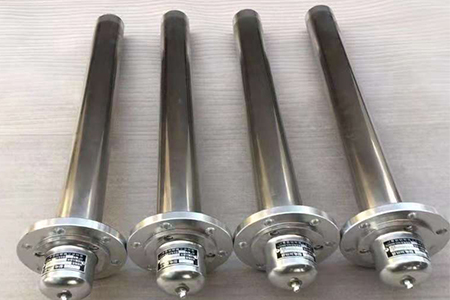

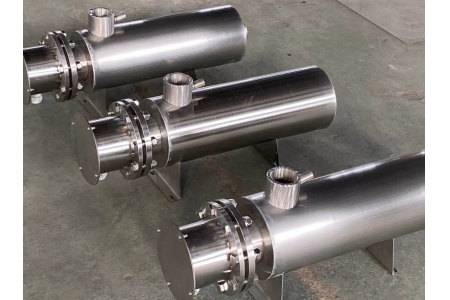
Heating Tube Heating Rod
"Heating tube" and "heating rod" are often used interchangeably in daily conversation, but in industrial and civil fields, they usually refer to different product forms and application scenarios. Simply put, a heating tube is more inclined towards industrial-grade, fixed installation tubular electric heating elements, while a heating rod is commonly used in aquariums, small equipment, or portable heating scenarios.
Below is a detailed analysis of the differences between the two, core parameters, and selection points.
Core Differences: Heating Tube vs. Heating Rod
Table
Download as Table
Export as Image
Feature Dimension Heating Tube/Pipe Heating Rod/Bar
Main Form Mostly U-shaped, W-shaped, flange type, fin type, etc., customizable into complex shapes. Mostly straight rod-shaped, single-head (cartridge) type, relatively simple structure.
Typical Applications Industrial ovens, reaction kettles, pipeline heat tracing, injection molding machine molds, large water heaters. Fish tanks/aquariums, small constant temperature baths, 3D printer heated beds, portable "immersion heaters".
Installation Method Mostly fixed installation with flanges, threads, etc., highly integrated with equipment. Mostly immersion or insertion type, relatively flexible and convenient installation.
Control Method Usually external temperature controllers, PID controllers, or connected to equipment PLC systems. Often built-in bimetallic strips or thermistors, with simple built-in temperature control or separate temperature control.
Power Density Designed according to medium and heat dissipation conditions, with a wide range, focusing on overall thermal balance. Especially single-head heating rods, with high power density, suitable for rapid heating in confined spaces.
⚙️ Common Working Principle and Structure
Whether it is a heating tube or a heating rod, the core is a tubular electric heating element, and the working principle and basic structure are highly consistent:
Heating Core: Inside is a high-resistance alloy heating wire (such as nickel-chromium alloy, iron-chromium-aluminum alloy), which generates heat when energized.
Insulating and Thermally Conductive Layer: The gap between the heating wire and the metal shell is tightly filled with crystalline magnesium oxide powder (MgO). It is both an excellent insulator, preventing leakage, and an efficient heat conductor, quickly transferring heat to the shell.
Protective Shell: The outermost layer is a metal tube (commonly 304/316 stainless steel, titanium tube, copper tube, etc.), selected based on the heating medium and environment, serving protection, sealing, and heat transfer purposes.
Sealed Terminals: Both ends are sealed with silicone, ceramic, or epoxy resin to prevent moisture and oil ingress, and to lead out the connection terminals.
Key Selection Parameters and Common Misconceptions
Improper selection is the main cause of short lifespan, low efficiency, and even safety accidents of heating elements. Please pay attention to the following points:
1. Power Density ≠ The Higher the Power, the Better
This is the most common misconception. Excessive power density (power per unit area, W/cm²) will cause the element surface temperature to rise sharply, accelerating oxidation, carbon deposition, and even burnout.
Heating liquids: Water heating generally ≤ 3 W/cm², oil heating ≤ 1.5 W/cm².
Heating air: Must use fin-type heating tubes, which reduce surface load by increasing heat dissipation area to prevent dry burning.
Mold heating: Single-head heating rods have high power density, but must ensure tight contact with the mold hole wall; otherwise, heat cannot be conducted away and will quickly burn out.
2. Material Determines Applicable Environment
Choosing the wrong material is the second biggest "killer".
Table
Download as Table
Export as Image
Heating Medium/Environment Recommended Material Reason
Clean water, air, non-corrosive oil 304 stainless steel High cost-performance, corrosion resistance meets general requirements.
Weakly corrosive liquids, seawater 316L stainless steel Molybdenum element enhances resistance to chloride ion corrosion.
Strong acids, strong alkalis, electroplating solutions Titanium alloy (Ti) Forms a dense oxide film on the surface in oxidizing media, extremely corrosion-resistant.
High temperature (>500℃), corrosive gases Incoloy 800/840 Nickel-chromium-iron alloy, excellent high-temperature oxidation and carburization resistance.
Laboratory, food, high cleanliness Quartz glass Extremely stable chemical properties, no pollution, but fragile.
3. "Dry-burnable" Does Not Mean "Recommended for Dry Burning"
Some products are marked as "allowing short-term dry burning", but this is only a safety redundancy, not a normal working state. Continuous dry burning for more than 30 seconds may cause the internal magnesium oxide powder to fail due to high-temperature carbonization, leading to reduced insulation, leakage, or even explosion. Be sure to equip with liquid level switches or temperature feedback closed-loop control.
4. Lead Wire Type Affects Reliability
Silicone wire: Resistant to bending, suitable for scenarios with frequent movement or disassembly.
Teflon wire: Higher temperature resistance (200℃+), oil-resistant, suitable for industrial fixed installation.
Ceramic bead/mica sheet lead-out: Ultra-high temperature resistance, but afraid of vibration and bending, only suitable for static, high-temperature environments.
Safety Usage and Maintenance Points
Strictly prohibit dry burning: During installation, ensure that the effective heating area is completely immersed in liquid or tightly fitted into metal molds.
Reliable grounding: All metal-shell heating elements must be effectively grounded, and it is recommended to install leakage protection switches, which is the last line of defense against electric shock accidents.
Regular cleaning: Scale, carbon deposits, and oil stains will act like an "insulation layer" hindering heat dissipation, causing internal overheating damage. If attachments are found on the surface, remove them promptly with a soft cloth or specialized cleaning agent.
Check insulation: After long-term shutdown or moisture exposure, measure the cold insulation resistance with a megohmmeter before reuse, usually required to be ≥ 1 MΩ; if lower, drying treatment is needed.
Standard operation: When heating high-viscosity oils (such as asphalt, paraffin), first reduce voltage to melt them, then raise to rated voltage to prevent local overheating.