
Heating tube heating rod
Heating tubes and heating rods usually refer to the same core component in industrial and civil fields, with the standard name being tubular electric heater or tubular electric heating element. It is a resistive heating device that efficiently and safely converts electrical energy into thermal energy, widely used in water heaters, ovens, industrial oil tanks, air heating furnaces, and various other scenarios.
Core Structure and Working Principle
The structural design of the heating tube cleverly solves the problems of electrified surface of the heating wire and insulating heat conduction.
Core Components:
Metal sheath tube: As the outer shell, usually made of stainless steel, copper, carbon steel, or titanium alloy, selected according to the heating medium (water, oil, air, corrosive liquids, etc.).
Resistance heating wire: The core heating element, uniformly distributed along the central axis inside the tube, commonly made of nickel-chromium alloy wire or iron-chromium-aluminum alloy wire.
Insulating and thermally conductive filler: The gap between the heating wire and the sheath tube is tightly filled with high-purity crystalline magnesium oxide powder (MgO). It possesses both excellent insulation and thermal conductivity, and is the key to the safe operation of the heating tube.
Sealing materials and lead-out rods: Both ends of the tube are sealed with silicone, glass, or epoxy resin to prevent moisture absorption by the magnesium oxide powder; lead-out rods are used to connect to the external power supply.
Working Principle:
After power is applied, current flows through the resistance heating wire, generating heat through the Joule heating effect. The heat is first rapidly and uniformly conducted to the metal sheath tube through the magnesium oxide powder, and then transferred from the sheath tube surface to the heated medium (such as water, oil, air, or metal molds) via heat conduction, convection, or radiation. Due to the insulating effect of the magnesium oxide powder, the surface of the heating tube is not electrified and can be safely immersed directly in liquids for heating.
Core Advantages
Safe and reliable: The surface is not electrified and can be directly immersed in liquids for heating; the structure is sturdy with high mechanical strength.
High thermal efficiency: Electrical energy is directly converted into thermal energy, with thermal efficiency typically reaching over 90%, and the heat transfer path is short with fast response.
Strong adaptability: By changing the sheath tube material and internal structure, it can adapt to various media such as water, oil, air, acid-base solutions, and even low-melting-point metals.
Flexible structure: Can be made into various shapes such as straight tubes, U-shaped, W-shaped, spiral, etc., to fit different installation spaces and heating requirements.
Main Types and Selection Key Points
The selection of heating tubes is crucial; incorrect selection can seriously affect lifespan or even cause safety accidents.
Table
Download as table
Export as image
Type Core Features Applicable Scenarios
Ordinary tubular heater Simple structure, low cost, heating core directly contacts the medium. Heating water, non-corrosive liquids, air, and other general conditions.
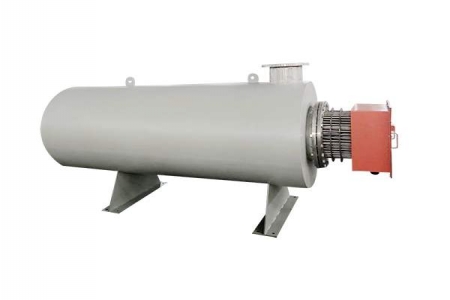
Sheathed heater Adopts a "core + sheath" separated structure, installed via flange. The core can be replaced without draining the oil tank, making maintenance extremely convenient. Hydraulic/lubricating oil tanks, heating media that are high-value or difficult to replace.
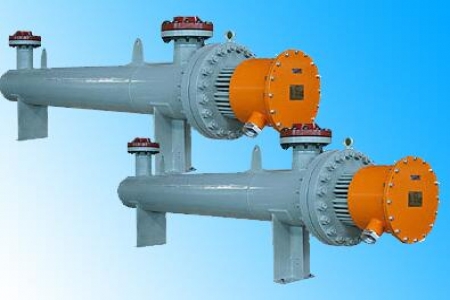
Explosion-proof heater The wiring part is sealed with a flameproof enclosure, achieving explosion-proof levels such as dⅡCT4 and IP65 protection standards. Hazardous environments with flammable and explosive gases such as petrochemical and coal mining industries.
Key Selection Parameters
Surface load (W/cm²): This is the most critical parameter! It refers to the power per unit surface area.
For liquids (oil/water): Surface load should be controlled at ≤ 3 W/cm². For oils prone to carbonization (such as heat transfer oil), preferably ≤ 0.7 W/cm² to prevent local overheating and carbon deposition, which shortens lifespan.
For air: Surface load can be slightly higher, but good ventilation and heat dissipation conditions must be ensured.
Working temperature and material: Select appropriate sheath tube and heating wire materials based on the maximum working temperature. For example, high-temperature air heating can use alloy 600 sheath; corrosive media require titanium alloy or PTFE coating.
Strictly prohibit dry burning: During installation, ensure that the effective heating zone is completely immersed in the heated medium. Dry burning will instantly burn out the heating tube.
Installation and maintenance: Regularly clean scale or carbon deposits on the surface of the heating tube, as they severely hinder heat dissipation, causing internal temperatures to rise and damage the tube.