
Heating Tube and Heating Rod
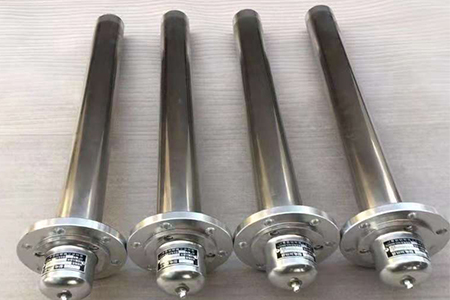
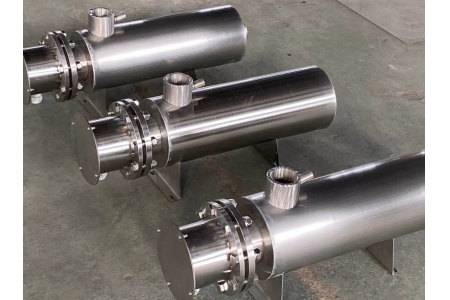
In the industrial field, heating tubes and heating rods usually refer to the same type of product, namely tubular electric heaters. It is a universal heating element that efficiently converts electrical energy into thermal energy. With advantages such as simple structure, high thermal efficiency, good mechanical strength, easy installation, and safety and reliability, it has become the most basic and core "thermal capillary" in industrial temperature control.
Core Structure and Working Principle
Its core structure involves placing a spiral resistance wire as the heating element inside a metal outer tube, tightly filling the gaps with crystalline magnesium oxide powder that has good thermal conductivity and insulation properties, and finally forming it through a tube shrinking process.
Metal outer tube: Different materials are selected based on the usage environment (such as temperature and corrosiveness), commonly including 304/316L stainless steel, titanium, Incoloy 800/840 alloys, etc.
Heating element: Usually nickel-chromium (Ni-Cr) wire or iron-chromium-aluminum (Fe-Cr-Al) wire.
Insulating and thermally conductive layer: High-purity magnesium oxide powder ensures electrical insulation between the heating wire and the outer tube while efficiently conducting heat.
Sealing and terminals: Sealed with materials such as silicone, epoxy, or glass, with lead rods (terminals) for connecting to the power supply.
When powered on, current flows through the resistance wire to generate heat, which is conducted through the magnesium oxide powder to the surface of the metal tube, and then dissipated to the heated medium (water, oil, air, metal molds, etc.).
Main Classifications and Applications
Based on different shapes, structures, and heating media, heating tubes/rods are mainly divided into the following categories:
Table
Download as Table
Export as Image
Type Structural Features Typical Application Scenarios
Straight/U-shaped Heating Tube Simplest structure, with single or double lead-out Heating liquids in water tanks, oil tanks, boilers, chemical reactors, etc.
Fin-type Heating Tube Metal heat dissipation fins wound on the surface, increasing the heat dissipation area by 2-3 times Air heating applications such as ovens, drying tunnels, and fan heaters
Single-head Heating Rod Small size, high power density, can be directly inserted Solid heating for injection molding machine molds, die-casting molds, packaging equipment cutting blades, etc.
Titanium/Special Heating Tube Made of corrosion-resistant/high-temperature alloys such as titanium and Incoloy Heating corrosive media in electroplating tanks, seawater desalination, strong acids and alkalis, etc.
Quartz/Ceramic Heating Rod Fast heating, clean and pollution-free, rapid thermal response Precision temperature control scenarios such as laboratory equipment, 3D printer heated beds, medical sterilization, etc.
Key Points for Selection and Usage
Correct selection and standardized usage are crucial for ensuring the performance and lifespan of heaters.
Three Core Selection Criteria
Clarify the heating object: This is the foundation of selection.
Heating liquids: Must be equipped with dry-burn protection, and choose 304, 316L, or titanium based on the corrosiveness of the medium.
Heating air: Must use fin-type heating tubes; ordinary straight tubes are prone to overheating and burning out in air due to poor heat dissipation.
Heating molds: Choose single-head heating rods, and precisely match the installation hole diameter to ensure efficient heat transfer.
Calculate power scientifically: More power is not always better.
Excessive power can cause rapid temperature rise, high surface load, accelerated aging, or even burnout.
Insufficient power results in slow heating and failure to meet requirements.
Surface load (W/cm²) is a core indicator; when heating oils, it is generally recommended to control it at ≤0.7 W/cm² to prevent oil carbonization.
Choose the right material: Balance practicality and economy.
304 stainless steel: Best cost-performance ratio, suitable for non-corrosive environments like clean water and air.
316L stainless steel: Stronger corrosion resistance, suitable for mildly corrosive or poor water quality environments.
Titanium/Incoloy: "Tough tools" for strong acids, strong alkalis, or ultra-high temperature conditions, but with higher cost.
Safety Rules for Usage
No dry burning: This is the most common and fatal mistake! The effective heating zone must be fully immersed in liquid or tightly attached to the solid being heated. Dry burning can quickly burn out the heating tube and even cause a fire.
Regular cleaning: Scale or carbon deposits on the tube surface must be removed promptly to prevent overheating damage due to poor heat dissipation.
Electrical safety: Ensure the outer shell is effectively grounded, and the working environment humidity should not be too high to avoid moisture at the terminals.
Standard operation: When heating solid substances like asphalt or paraffin wax, first reduce the voltage, and after they melt, increase to the rated voltage.