
Heating Tube Heater Rod
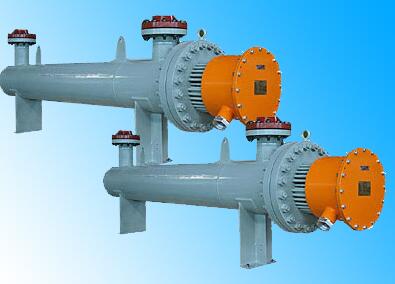
Heating tube/heater rod (also known as electric heating tube, heating element) is a universal heating element that converts electrical energy into thermal energy, widely used in industrial manufacturing, aquaculture, household appliances, and other fields. It has a simple structure, low cost, and high reliability, making it one of the most basic and versatile heating solutions.
Heating tubes operate based on the current thermal effect (Joule effect): when current passes through internal resistance wires (such as nickel-chromium alloy wire, iron-chromium-aluminum alloy wire) or heating elements like PTC ceramics, heat is generated due to resistance; the heat is conducted through an insulating and thermally conductive medium (high-purity magnesium oxide powder) to the metal shell, and then heats the external medium (liquid, air, or solid) through conduction, convection, or radiation.
Some heating rods are equipped with temperature control devices (thermistors, bimetallic strips, or smart chips) that can monitor temperature in real time and automatically adjust current to maintain a constant temperature.
Download as table
Export as image
Component Function Description
Metal Shell Made of stainless steel (SUS304/316L), copper, carbon steel, or titanium alloy, providing mechanical support, corrosion resistance, and thermal conductivity
Heating Element Core component, spiral nickel-chromium wire (NiCr) or iron-chromium-aluminum wire (FeCrAl), some types use PTC ceramics or nano heating elements
Insulating Fill Layer High-purity magnesium oxide powder (MgO), with high temperature resistance (above 1000°C), high insulation, and high thermal conductivity, preventing short circuits and efficiently transferring heat
Sealed Terminal Sealed with ceramic glue or silicone, terminal is threaded copper nut or quick-connect tab, with moisture-proof, oxidation-proof, and leakage-proof functions
Heat Dissipation Fins (some models) Air heating type with metal fins wound on the surface to increase heat dissipation area
By heating principle
Resistance wire type: Most traditional and widely used, low cost, heats through nickel-chromium/iron-chromium-aluminum resistance wire
PTC ceramic type: Positive temperature coefficient thermistor, itself is both a heating element and a temperature control switch; when temperature reaches the Curie point, resistance increases sharply, automatically reducing power, extremely safe, no overheating
Nano heating element type: Uses nanotechnology materials, efficient heating, energy-saving and environmentally friendly
By structural form
Single-head heating rod (single-end lead): Single-end wiring, tubular structure, high power density, suitable for space-constrained scenarios such as molds and pharmaceuticals
Double-head heating tube (U-shaped/straight tube): Both ends lead out, commonly used for large-area heating in water tanks, ovens, etc.
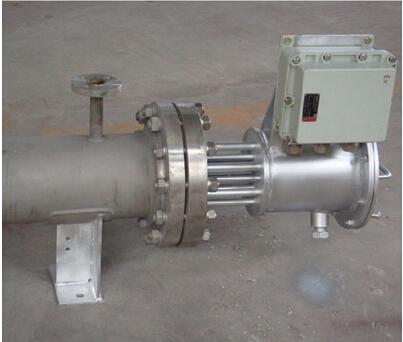
Flange heating tube: Installed on container walls via flange connection, suitable for high-pressure environments like boilers and reactors
Fin heating tube: Surface wound with heat dissipation fins, specially for air heating (ovens, air ducts, etc.)
Ceramic heating tube (MCH): Alumina ceramic substrate, more environmentally friendly, saves 20%–30% energy, longer lifespan
By temperature control method (aquarium field)
First generation · Mechanical (bimetallic strip): Uses bimetallic strip thermal expansion deformation to control contact on/off, cheap but poor temperature control accuracy (±1–2°C), risk of contact sticking causing continuous heating
Second generation · Electronic (thermistor): Uses thermistor probe to detect temperature, microprocessor controls on/off, temperature control accuracy up to ±0.5°C, usually equipped with out-of-water power-off protection
Third generation · Smart (APP/WiFi): Remote control via mobile phone, can set safe temperature range, real-time monitoring of heating status
Table
Download as table
Export as image
Parameter Typical Range
Tube diameter φ3mm ~ φ50mm
Length 20mm ~ 2500mm (customizable)
Voltage 5V ~ 480V (common 24V/110V/220V/380V)
Power 10W ~ 500kW
Surface power density Standard type 5–8W/cm²; high power type 8–15W/cm²; ultra-high power type 15–40W/cm²
Maximum working temperature 700°C ~ 850°C
Insulation resistance Cold state ≥50MΩ
Withstand voltage 1500V ~ 1800V
Diameter tolerance +0/-0.05mm
Length tolerance ±2mm
Power deviation +5% ~ -10%
Industrial manufacturing
Mold heating: injection molds, die-casting molds, hot press molds, hot riveting molds
Constant temperature chambers/ovens: aging tests, drying chambers, temperature control boxes, preheating tables
Roller/roller heating: laminating rollers, bonding rollers, hot stamping rollers, packaging heat sealing rollers
Hot plates/hot tables: PCB preheating, chip preheating, material softening tables, welding preheating
Fluid/gas heating: water tank heating, gas preheating, industrial pipeline insulation
Aquaculture
Aquarium constant temperature heating (freshwater tank/saltwater tank)
Power selection experience: about 2W heating power per liter of water
Household appliances
Electric water heaters, electric boilers, electric heating furnaces
Water dispensers, coffee machines, soy milk machines, and other small liquid heating
Other fields
Semiconductor equipment, 3D printers, pharmaceutical machinery, packaging machinery, ultrasonic equipment, analytical instruments, etc.
Voltage matching: select according to power supply conditions (industrial commonly 220V/380V, non-standard automation commonly 24V)
Power calculation: comprehensive calculation based on heating medium volume, heating rate requirements, and insulation needs
Size adaptation: tube diameter must match installation hole diameter (for single-head rods, recommended single-side gap ≤0.05mm), length meets heating coverage range
Material selection: choose according to medium corrosiveness (freshwater use SUS304, seawater/acid-alkali use SUS316L or titanium tube, high temperature use Incoloy800/Incoloy840)
Surface power density: liquid heating can choose higher density (8–12W/cm²), air dry-burning environments need lower density (≤6W/cm²) to extend lifespan
Temperature control method: pair with thermocouple + temperature controller for closed-loop temperature control