
Heating Coil Heating Plate
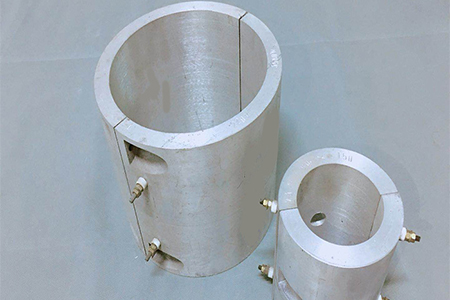
Heating coils (also known as electric heating coils or heating rings) and heating plates (also known as electric heating plates or hot plates) are two of the most common electric heating devices, used to heat cylindrical and flat workpieces respectively. They are widely applied in plastic machinery, chemical equipment, laboratory instruments, home appliances, and other fields. Both are essentially devices that convert electrical energy into thermal energy, with the difference lying in their structural shape and applicable scenarios.
Heating Coil
Working Principle
The heating coil uses electric heating alloy wire (nickel-chromium alloy or iron-chromium-aluminum alloy) as the heating element, wound around a mica soft board or ceramic skeleton as an insulating layer, and covered with a thin metal plate (stainless steel plate, aluminum plate, etc.) for shaping. When energized, the heating wire generates Joule heat, which is conducted through the metal shell to the surface of the heated object.
Main Classifications
Table
Download as Table
Export as Image
Type Structural Features Maximum Working Temperature Surface Load
Stainless Steel Mica Heating Coil Heating wire wound around mica skeleton, covered with stainless steel shell 150~450℃ 2.5~3W/cm²
Cast Aluminum Heating Coil Tubular heating element cast into aluminum alloy shell 300~450℃ 2.5~4.5W/cm²
Cast Copper Heating Coil Tubular heating element cast into copper alloy shell 500~600℃ 3.5~5.0W/cm²
Cast Iron Heating Coil Tubular heating element cast into cast iron shell 550~700℃ 4.5~6.0W/cm²
Ceramic Heating Coil Ceramic insulator wraps heating wire Up to 800℃ —
Nano Infrared Heating Coil Nano heating alloy + far-infrared coating + insulation layer Depends on specific design Energy saving rate 30%~80%
Electromagnetic Induction Heating Coil High-frequency coil generates eddy current heating Up to above 500℃ Thermal conversion efficiency >96%
Typical Applications
Plastic Machinery: Barrel heating for injection molding machines, extruders, film blowing machines, and pelletizers
Chemical Equipment: Reactor and pipeline heating
Rubber Machinery: Vulcanizer heating
Cable Machinery: Cable extruder head heating
Home Appliances: Electric water boilers, rice cookers, etc.
Heating Plate
Working Principle
The heating plate converts electrical energy into thermal energy to heat flat or curved workpieces. Depending on the heating method, it can be divided into three principles: resistance heating, electromagnetic induction heating, and thermal radiation.
Main Classifications
Table
Download as Table
Export as Image
Type Core Features Applicable Temperature
Stainless Steel Electric Heating Plate Mica plate insulation + stainless steel shell, corrosion-resistant, high mechanical strength ≤300℃
Cast Aluminum/Cast Copper Heating Plate Tubular element cast into metal plate, high strength, not easily deformed 150~600℃
Ceramic Heating Plate Ceramic insulator wraps heating wire, high temperature resistance, good insulation Up to 800℃
Silicone Rubber Heating Plate Ultra-thin and flexible, waterproof and moisture-proof, customizable shape ≤200℃
Graphite Heating Plate Excellent thermal conductivity, resistant to strong acids and alkalis, fast heating Up to above 800℃
Carbon Crystal/Carbon Fiber Heating Plate Electric-to-thermal conversion rate >98%, uniform surface heating Mainly for low-temperature heating
Electromagnetic Heating Plate High-frequency eddy current heating, thermal efficiency >96%, surface can be touched Up to above 500℃
PTC Heating Plate Positive temperature coefficient self-limiting temperature, no external temperature control needed Depends on material
Typical Applications
Plastic Machinery: Mold heating for injection molding machines, hot pressing templates
Laboratory: Strong acid digestion (graphite plate), conventional constant temperature heating (stainless steel plate)
Industrial Heating: Ironing machines, hot presses, vulcanizers
Home Appliance Field: Induction cooker panels, electric irons
Heating Field: Carbon crystal floor heating, carbon fiber heaters
Comparison between Heating Coil and Heating Plate
Table
Download as Table
Export as Image
Comparison Item Heating Coil Heating Plate
Shape Ring/cylindrical Flat/right-angle/special-shaped
Heating Object Cylindrical workpieces (barrels, pipes, mold outer circles) Flat workpieces (templates, panels, tank bottoms)
Installation Method Sleeved on the outer circle of the heated object Attached to the flat surface of the heated object
Typical Applications Injection molding machine barrels, extruder barrels Hot pressing templates, laboratory electric heating plates
Selection Key Points
When selecting, the following factors need to be comprehensively considered:
Shape of the heated object: Choose a heating coil for cylindrical shapes, and a heating plate for flat shapes
Working temperature: Select the corresponding material grade based on process temperature (cast aluminum ≤450℃, cast copper ≤600℃, cast iron ≤700℃, ceramic/graphite ≤800℃)
Surface load: Choose based on heating speed and lifespan requirements; higher load means faster heating but shorter lifespan
Installation space: Confirm the diameter/size of the heated object and whether the installation position allows it
Environmental conditions: Choose stainless steel or graphite material for corrosive environments; explosion-proof type is required for explosion-proof areas
Temperature control accuracy: Ordinary switch control is suitable for scenarios with low requirements; precision processes require PID intelligent temperature control, with accuracy up to ±0.2℃~±2℃
Energy saving needs: Traditional resistance heating has lower efficiency; consider nano-infrared or electromagnetic induction types, with energy saving rates up to 30%~80%
Usage Precautions
Strictly no dry burning: The effective heating area must be in close contact with the heated object; dry burning will burn out the heating element
Reliable grounding: The shell must be effectively grounded to prevent electric leakage accidents
Voltage limit: Working voltage must not exceed 10% of the rated value
Moisture and dirt prevention: The wiring part should be placed outside the heating layer and insulation layer to avoid contact with moisture and corrosive media
Insulation recovery: If the insulation resistance is lower than 1MΩ due to long-term storage, it can be restored by baking in a 200℃ oven for 5-6 hours
Regular cleaning: Dust or contaminants on the surface should be removed promptly to avoid affecting heat dissipation and shortening lifespan
Environmental requirements: Relative air humidity not greater than 95%, no explosive or corrosive gases
Relationship with Heating Products You Have Learned Before
Among the several electric heating products you have already learned about, heating coils and heating plates are positioned as local/surface heating devices, complementing pipeline heaters and heating cables:
Table
Download as Table
Export as Image
Product Heating Method Applicable Objects
Heating Coil Ring wrapping heating Barrels, outer circles of pipes
Heating Plate Flat surface contact heating Templates, panels
Pipeline Heater Medium flows through the device interior for heating Fluid medium temperature rise
Heating Cable Wrapped around the outer wall of pipes for insulation Pipe anti-freezing and constant temperature
In simple terms, heating coils and heating plates are responsible for "baking from the outside," pipeline heaters are responsible for "boiling from the inside," and heating cables are responsible for "wrapping for insulation"