
Heating Band Heating Plate
"Heating bands" and "heating plates" are two core components in the industrial heating field with distinctly different forms, applications, and selection logic. Simply put, heating bands are mainly used for wrapping around cylindrical components (such as pipes and barrels) for heating, while heating plates are used for contact conduction heating on flat or large-area surfaces.
Below, we will analyze in detail the core differences, technical classifications, and selection points between the two.
Core Differences: Heating Band vs. Heating Plate
Table
Download as Table
Export as Image
Feature Dimension Heating Band/Ring Heating Plate
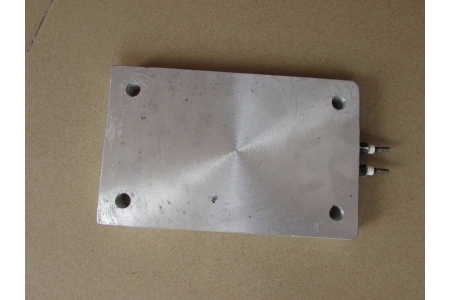
Main Forms Ring, half-ring, arc; customizable flanges or spring clamps. Flat plates, discs, custom-shaped plates; may have holes or grooves.
Typical Applications Injection molding/extrusion machine barrels, hot runner molds, pipe tracing, valve insulation. Laboratory hot plates, industrial heat presses, semiconductor wafer chucks, food baking equipment.
Heating Method Primarily indirect resistance heating; heat transfers from the outer wall to the heated object via conduction. Resistance heating (conduction), infrared radiation, electromagnetic induction, etc.
Installation Method Clamp-type, flange-type, spring-type; tightly fits cylindrical surfaces. Bolt fixing, embedded, bracket-mounted; ensures good flat contact.
Temperature Control Features Multi-zone temperature control, fast response; requires air/water cooling to prevent overheating. Overall or zonal PID precise temperature control; large heat capacity; high temperature uniformity requirements.
Mainstream Technical Classifications and Selection Guide
Whether for heating bands or heating plates, the technical routes revolve around heating element materials and heat transfer methods. Here are the current mainstream options in the market:
1. Mainstream Types of Heating Bands
Table
Download as Table
Export as Image
Type Core Features Applicable Scenarios Selection Points
Stainless Steel Mica/Ceramic Band Traditional mainstream; low cost; withstands temperatures of about 400-500°C. General injection molding machines, extruders; production lines with less stringent temperature control accuracy. Pay attention to the number of mica layers and insulation; power density should not be too high to prevent mica carbonization.
Cast Aluminum/Copper Heating Band Integrally formed; large heat capacity; excellent temperature uniformity (±1°C). High-precision injection molding, medical consumables, multi-zone temperature linkage control. Confirm thermocouple hole positions; slower heating, suitable for continuous production.
Ceramic Infrared Heating Band Far-infrared radiation; thermal efficiency >65%; surface temperature up to 700°C. Drying hoppers, heat-sensitive materials like PVC/TPU, clean rooms. Pay attention to infrared wavelength matching; need reflective shields to improve heat utilization.
Electromagnetic Induction Heating Band Non-contact heating; energy saving 30%-40%; low surface temperature; long lifespan. Energy-saving retrofits of old equipment; high-load continuous operation. Requires dedicated control cabinet; high initial investment but significant long-term returns.
2. Mainstream Types of Heating Plates
Table
Download as Table
Export as Image
Type Core Features Applicable Scenarios Selection Points
Resistance Wire/Tube Heating Plate Simple structure; low cost; maximum temperature about 400-500°C. Routine laboratory heating, food warming, general industrial heat pressing. Pay attention to panel material (stainless steel/cast iron/aluminum); match power density with heat dissipation conditions.
Ceramic Infrared Heating Plate Radiant heating; fast heating; corrosion-resistant; easy to clean. Laboratory digestion, acid evaporation, semiconductor processes. Pay attention to thermal shock resistance of the ceramic substrate; check if programmable temperature ramping is supported.
Electromagnetic Induction Heating Plate Heats only magnetically conductive metals; extremely high thermal efficiency; safe and environmentally friendly. Metal smelting, heat treatment, high-end laboratories. Must use magnetically conductive cookware/workpieces; complex control; higher cost.
Semiconductor/Silicone Heating Plate Flexible and ultra-thin; extremely high temperature uniformity (±1°C). Wafer etching chucks, precision medical equipment, vacuum environments. Pay attention to insulation rating and vacuum compatibility; requires PID closed-loop control.
Key Selection Parameters and Common Misconceptions
1. Power Density is the Lifeline
Heating Bands: Stainless steel bands generally ≤ 3.5 W/cm², cast aluminum bands ≤ 4.0 W/cm², ceramic bands can reach above 5.0 W/cm². Excessive power can accelerate aging and breakdown of internal insulation materials (such as magnesium oxide powder, mica).
Heating Plates: Laboratory plates typically 0.5-1.5 W/cm², industrial heat press plates can reach 3-5 W/cm². Ensure the heated object can fully absorb heat; otherwise, heat accumulation on the plate surface can cause temperature control failure or element burnout.
2. "Uniformity" is More Important than "Maximum Temperature"
For heating bands, surface temperature difference is a key indicator. High-quality cast aluminum bands can achieve ±1°C, while ordinary mica bands may have differences above ±10°C. Excessive temperature differences can lead to uneven plastic plasticization and high internal stress in products.
For heating plates, surface temperature uniformity is the core. Laboratory-grade requires ±1-2°C, industrial-grade within ±5°C. When selecting, request the manufacturer to provide measured temperature distribution maps.
3. Installation and Contact Determine Lifespan
Heating Bands: Must tightly fit the heated object. Excessive gaps can cause local overheating and accelerated oxidation. Cast aluminum bands are usually fastened with bolts, mica bands with spring clamps; after installation, check the gap (generally required ≤ 0.5mm).
Heating Plates: Flatness is crucial. The bottom surface of the heated object must be flat; if necessary, use thermal grease to fill microscopic gaps and improve heat conduction efficiency.
4. Environmental Adaptability
Humid/Corrosive Environments: Prioritize cast aluminum, stainless steel shells, or heating plates with Teflon coating. For heating bands, confirm insulation resistance and protection rating (e.g., IP54).
Vacuum/Clean Environments: Must use low outgassing materials (such as ceramics, special alloys); avoid ordinary mica or organic insulation materials.
Safety Usage and Maintenance Points
No No-Load/Dry Heating: Never power on heating bands not installed in place or heating plates without a heated object. No-load operation can cause temperatures to spike instantly, burning out elements within seconds.
Reliable Grounding: All metal-shell heating elements must be effectively grounded, and it is recommended to install leakage protection switches and over-temperature protectors (independent of the main temperature controller).
Regular Insulation Checks: Use a megohmmeter to measure cold insulation resistance; typically required ≥ 1 MΩ (some high-demand scenarios ≥ 50 MΩ). If damp or aged, dry or replace.
Avoid Mechanical Damage: When installing heating bands, do not strike directly with a metal hammer; use a wooden or rubber mallet. For heating plates, avoid heavy impacts on the panel to prevent ceramic cracking or resistance wire deformation.
Pay Attention to Cooling Systems: For injection molding/extruder heating bands, air/water cooling systems are standard. Cooling failure can lead to temperature runaway, material decomposition, or even fire.