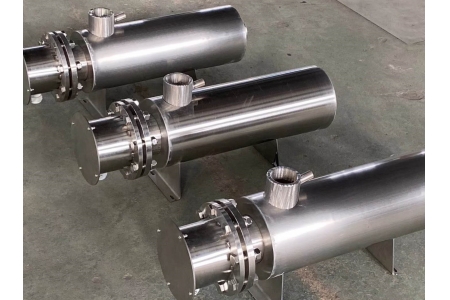

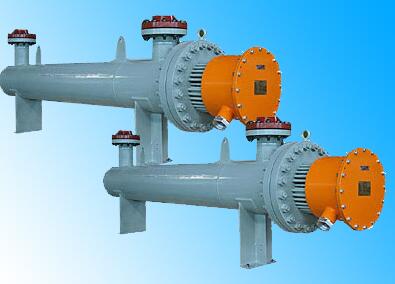
Pipeline Electric Heater
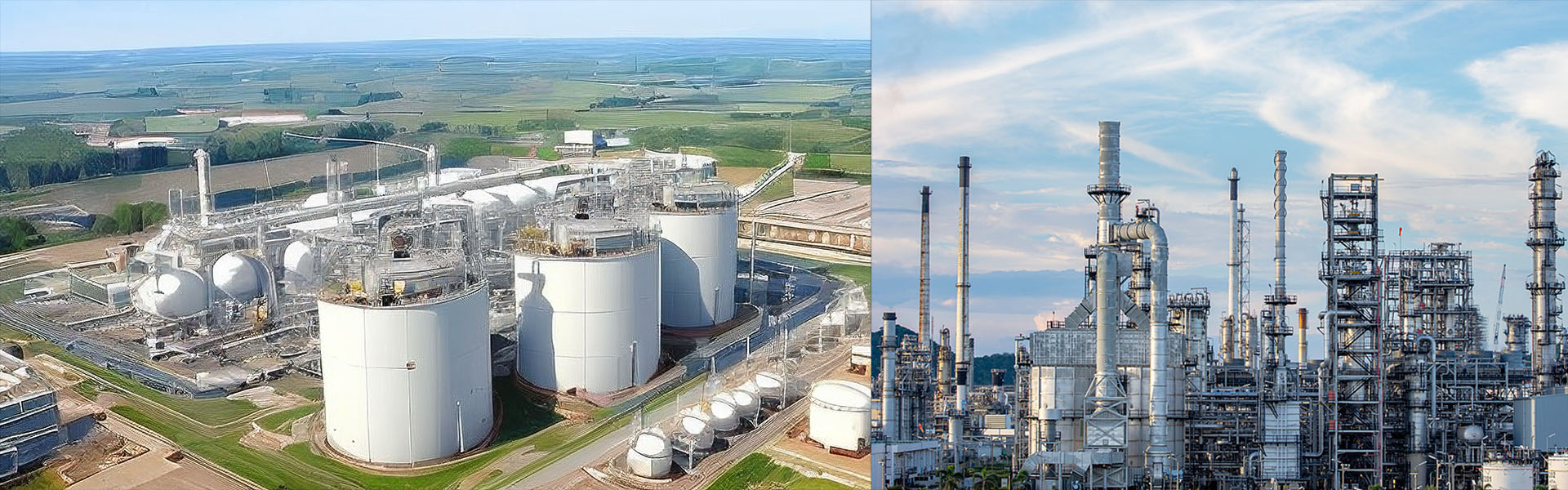
Pipeline electric heater (also known as inline electric heater, online heater, sheathed tubular electric heater) is an electric heating device used to heat fluid media (gas or liquid) inside pipelines. It converts electrical energy into thermal energy to raise the temperature of the medium flowing through the cylinder. It is widely used in chemical, petroleum, electric power, metallurgy, food, pharmaceutical and other industries.
Working Principle
The core principle of the pipeline electric heater is the Joule heating effect:
Electrical energy conversion: Current passes through high-temperature resistance wires (such as nickel-chromium alloy wires) inside the metal tube, generating Joule heat.
Heat conduction: Heat is conducted through the densely filled crystalline magnesium oxide powder (which serves both as insulation and thermal conductor) inside the tube to the metal sheath wall.
Heat exchange: The fluid to be heated flows through the cylinder under pressure. The flow deflector plates inside the cylinder guide the fluid along a specific path, allowing it to fully absorb the heat generated by the electric heating elements.
Temperature control: The temperature sensor at the outlet monitors the temperature in real time and feeds it back to the controller (microcontroller or PLC), which automatically adjusts the heating power to achieve constant temperature control.
Structural Composition
Table
Download as Table
Export as Image
Component Function
Tubular electric heating element Core heating element, resistance wire + magnesium oxide powder sealed inside a metal tube
Cylinder/Heating vessel Houses the heating elements and forms the fluid channel
Flow deflector plate Guides the flow path of the medium to ensure uniform heating
Temperature controller PID intelligent closed-loop temperature control, accuracy up to ≤±1℃
Thermal safety cut-off Automatically cuts off power when overheating to prevent dry burning
Safety valve Overpressure protection
End cover/Flange Sealing and connection
Main Classifications
By Heating Medium
Table
Download as Table
Export as Image
Type Heating Object Typical Media
Gas pipeline heater Gas Air, nitrogen, argon, ammonia, etc.
Liquid pipeline heater Liquid Water, heavy oil, lubricating oil, diesel, heat transfer oil, asphalt, etc.
By Heating Method
Table
Download as Table
Export as Image
Type Principle Features
Direct type Heating element directly contacts the medium High thermal efficiency, but higher safety requirements
Indirect type Heat transfer through a medium (water, steam, etc.) High safety, suitable for food and pharmaceutical industries
By Special Purpose
Explosion-proof type: Explosion-proof rating up to Ex db IIC T1~T6 Gb, suitable for flammable and explosive places such as chemical, petroleum, and mining areas.
Anti-freeze type: Used for pipeline anti-freeze and insulation, also known as anti-freeze heater/anti-freeze tape.
Storage tank type: Used for heating and insulation of media in large storage tanks and tank trucks.
Key Technical Parameters
Table
Download as Table
Export as Image
Parameter Typical Range
Power range 2kW~6000kW
Gas heating temperature 0~1050℃
Liquid heating temperature 0~350℃ (some designs up to 850℃)
Working pressure Standard 1.0~8MPa (high-pressure customization up to 10~20MPa)
Gas processing capacity Up to 55000m³/h
Liquid flow rate Up to 120m³/h
Heating tube surface load 1.2~3.8W/cm²
Electrothermal conversion efficiency ≥98%
Temperature control accuracy ≤±1℃
Heating rate Up to 10℃/s
Protection rating Standard IP54, explosion-proof and anti-corrosion version IP65
Core Features
High efficiency and energy saving: Electrothermal conversion efficiency ≥98%, saving more than 30% of production costs compared to traditional steam or heat transfer oil heating.
Rapid heating: Reaches the set temperature within 5~10 minutes, with fast heating and cooling rates.
Precise temperature control: PID intelligent closed-loop control, temperature drift <1℃ during long-term operation.
Safe and reliable: Multi-level safety system integrating mechanical protection, electrical protection, and system linkage protection, equipped with dry-burn and over-temperature protection.
Modular design: Supports quick disassembly and assembly, easy maintenance.
Corrosion and wear resistance: Made of stainless steel or special alloy materials, suitable for harsh working conditions.
Typical Application Scenarios
Table
Download as Table
Export as Image
Industry Application Scenarios
Chemical/Petroleum Preheating and viscosity reduction of heavy oil, lubricating oil, diesel; heating of chemical materials; feed heating for polymerization reactions
Electric power/Metallurgy Raw water heating in power plants; process water heating
Food/Pharmaceutical Milk sterilization and conveying; constant temperature heating of process fluids
HVAC/Construction Hot water circulation in high-rise buildings; air conditioning heating systems
New energy Solar pipeline anti-freeze; process heating in battery industry
Marine/Ocean Explosion-proof heating on offshore platforms; marine supporting equipment
Scientific research Precise heating of gases/liquids in laboratories
Common Model Series
Table
Download as Table
Export as Image
Model Series Applicable Media
SRQ series Air heating
SRXY series Solution heating
SRS series Water heating
SRM series Mold heating
GHY series Heavy oil/lubricating oil preheating
GHL-A series External water heating
BR/BRY series Explosion-proof heating
SRY6F/GHY6F Wind power gearbox heating
Usage Precautions
Only start heating when the medium continuously flows through the heater; never operate without medium (dry burning).
Regularly check the insulation resistance of the heating elements; if it falls below 1MΩ, dry them out.
Explosion-proof equipment must be wired and grounded strictly in accordance with explosion-proof regulations.
The control system should be equipped with reasonable over-temperature alarms and interlock protection values.
Before restarting after long-term shutdown, preheat at low power to remove internal moisture.