
Inline Heater
An inline heater (also known as a pipeline heater, in-line heater, or sheathed tubular electric heater) is an electric heating device used to heat fluid media (gas or liquid) flowing through pipes. It is widely applied in petrochemical, power, metallurgy, food and pharmaceutical, and building heating industries. Its core principle is converting electrical energy into thermal energy to heat the medium flowing through the pipe. Production and testing comply with the JBT2379-93 standard.
Working Principle
The core heating principle of an inline heater is the Joule heating effect, with the specific process as follows:
Electrical energy conversion: Current passes through high-resistivity alloy resistance wires (such as nickel-chromium or iron-chromium-aluminum alloys), converting electrical energy into thermal energy.
Heat conduction: The generated heat is conducted to the sheath wall through tightly packed insulating and thermally conductive filler (crystalline magnesium oxide powder) inside the metal sheath tube.
Heat exchange: The fluid to be heated flows through the cylinder under pressure, and the flow deflectors inside the cylinder guide the fluid along a specific path to fully absorb the heat generated by the electric heating elements.
Intelligent temperature control: A temperature sensor at the outlet monitors the temperature in real time and feeds it back to the controller (microcontroller or PLC), which automatically adjusts the heating power to ensure a constant outlet temperature.
Structural Composition
An inline heater consists of two main parts: the body and the control system.
Body Part
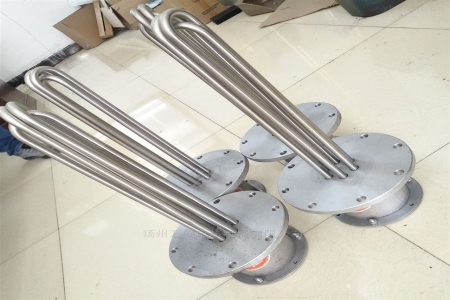
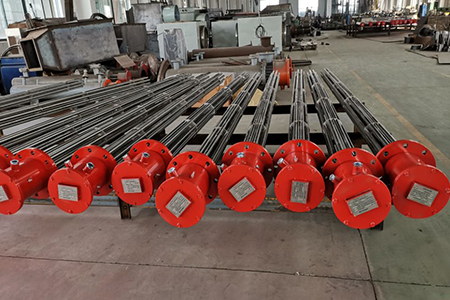
Tubular electric heating elements: High-temperature resistance wires are placed inside metal tubes, with the gaps filled with crystalline magnesium oxide powder, formed through a compression process.
Cylinder (heating vessel): A pressure-bearing shell with internal flow deflectors to optimize uniform heating of the medium.
End caps: Seal both ends of the cylinder.
Flange connections: Used to connect to the piping system.
Control System
Temperature controller: PID intelligent closed-loop temperature control, with temperature error controllable within ≤±1°C.
Temperature sensors: Equipped with two temperature sensing elements, one for preventing dry heating and the other for precise control of the outlet temperature.
Thermal safety cutout: Immediately cuts off the heating power supply in case of overtemperature.
Safety valve: Prevents overpressure.
Main Classifications
Table
Download as table
Export as image
Type Heating Medium Typical Applications
Gas inline heater Air, nitrogen, natural gas, etc. Drying, hot air systems, process gas heating
Liquid inline heater Water, oil, chemical solutions, etc. Process water heating, heavy oil preheating, thermal oil heating
Explosion-proof inline heater Various flammable and explosive media Chemical, petroleum, natural gas, mining, and other explosion-proof areas
Additionally, they can be subdivided by heating method:
Resistance heating type: Traditional mainstream method, mature technology.
PTC ceramic heating type: Self-limiting temperature characteristics, liquid and electricity separated, higher safety.
Electromagnetic induction heating type: Uses eddy currents to directly heat the tube wall, with thermal efficiency up to 95% or more.
Main Technical Parameters
Table
Download as table
Export as image
Item Parameter Range
Power range 2kW to 6000kW
Gas heating temperature 0 to 1050°C
Liquid heating temperature 0 to 350°C (some designs up to 850°C)
Working pressure Standard 1.0 to 8MPa (high-pressure custom up to 10 to 20MPa)
Gas processing capacity Up to 55000 m³/h
Liquid flow rate Up to 120 m³/h
Heating tube surface load 1.2 to 3.8 W/cm²
Electrical-to-thermal conversion efficiency ≥98% (electrical energy conversion rate over 95%)
Temperature control accuracy ≤±0.8°C to ±1°C
Explosion-proof rating Ex db IIC T1 to T6 Gb
Protection rating Standard IP54, explosion-proof and anti-corrosion type IP65
Response speed 5 to 10 minutes to reach set temperature
Core Features
High efficiency and energy saving: Electrical-to-thermal conversion efficiency ≥98%, saving over 30% in production costs compared to traditional thermal oil or steam heating.
Rapid temperature rise: Fast heating and cooling rates, up to 10°C/s, with quick and stable adjustment without temperature overshoot or lag.
High mechanical strength: The heating element is made of special alloy materials, exhibiting excellent mechanical performance under high-pressure air flow, suitable for long-term continuous operation.
Safe and reliable: Integrates multiple safety protection systems (overtemperature, overcurrent, leakage, explosion-proof). Modern equipment has evolved into a multi-level safety system combining mechanical protection, electrical protection, and system interlock protection.
Modular design: Supports quick disassembly and assembly, easy maintenance.
Long lifespan: Can last for decades when used in compliance with operating procedures.
Application Fields
Table
Download as table
Export as image
Field Typical Uses
Petrochemical Preheating and viscosity reduction of heavy oil/lubricating oil/diesel, heating chemical materials, feed heating for polymerization reactions
Power industry Raw water heating in power plants, hot water supply for heating systems
Metallurgy Heating of high-temperature process fluids
Food and pharmaceutical Milk sterilization and conveying, constant temperature for process fluids
Building heating Hot water circulation in high-rise buildings, anti-freezing of solar pipelines
Scientific research High-temperature gas/liquid heating in laboratories for aerospace, weapons industry, etc.
Natural gas Heat tracing systems at pressure reduction stations
Selection Points
When selecting, the following factors should be comprehensively considered:
Medium type: Gas or liquid, and whether the chemical properties are corrosive.
Flow rate and temperature rise: Calculate the required power based on the medium flow rate, specific heat capacity, and required temperature rise.
Working pressure: Confirm the system pressure rating and select equipment with the corresponding pressure level.
Explosion-proof requirements: Flammable and explosive places must use explosion-proof types, and confirm the explosion-proof rating.
Material compatibility: Select stainless steel, carbon steel, or other appropriate materials based on the corrosiveness of the medium.
Installation method: Flange connection or threaded connection, confirm the interface size.
Usage Precautions
Strictly prohibit dry heating: Only turn on the heating when the medium continuously flows through the heater; dry heating will burn out the electric heating elements.
Reliable grounding: The equipment must be reliably grounded to prevent electric leakage accidents.
Regular descaling: Liquid heaters require regular cleaning of scale inside the tubes to maintain heat exchange efficiency.
Drain after shutdown: After shutdown in winter, drain accumulated water to prevent freezing and cracking.
Check safety devices: Regularly check whether safety devices such as overheat protectors and safety valves are functioning properly.
Implementation Standards
Table
Download as table
Export as image
Standard Number Name
JBT2379-93 Production and testing standards for pipeline electric heaters
Difference from Heating Cables You Previously Learned About
Although inline heaters and heating cables (electric heat tracing tapes) you previously asked about are both electric heating products, their positioning and usage are clearly different:
Table
Download as table
Export as image
Comparison Item Inline Heater Heating Cable (Electric Heat Tracing Tape)
Functional positioning Heats the medium to the temperature required by the process Maintains pipe temperature, freeze protection and insulation
Installation method Connected in series in the piping system, with the medium flowing through the equipment internally Wrapped or attached to the outer wall of the pipe
Heating intensity High power, capable of large temperature rises Low power, mainly for temperature maintenance
Applicable scenarios Process heating, medium temperature rise Freeze protection and insulation, constant temperature conveying
In simple terms, an inline heater is "active heating," responsible for raising the medium from a low temperature to the target temperature; a heating cable is "passive insulation," responsible for preventing the temperature of the medium in the pipe from dropping. The two are often used together in industrial piping systems.