
Heating Cable
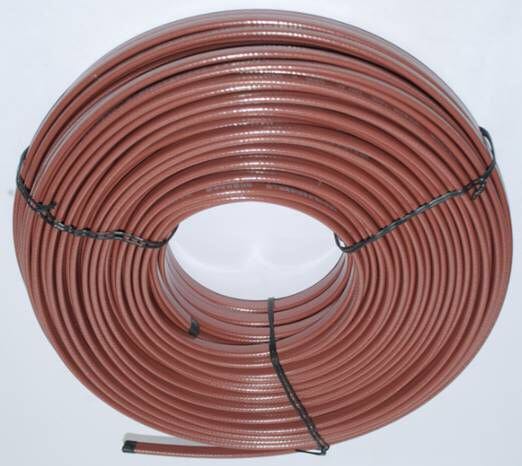
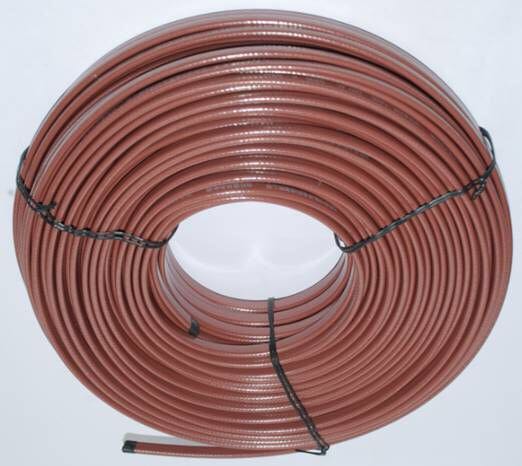
A heating cable is an electric heating product that is laid in cable form on the outer wall of pipes, floor structural layers, or equipment surfaces, and generates heat when energized to achieve insulation and freeze protection or space heating. Unlike the heating tubes, heating rings, and pipeline heaters introduced earlier, the core feature of a heating cable is its flexible cable form, which can be flexibly wound and laid along the surface of the object being heated, making it suitable for long-distance, large-area, or irregularly shaped heating scenarios.
The working principle of heating cables varies by type and is mainly divided into two mechanisms:
PTC self-regulating principle: The core tape of a self-regulating heat tracing cable uses a polymer PTC (positive temperature coefficient) material, uniformly extruded between two parallel metal busbars. After energization, current flows laterally through the PTC layer to generate heat; when the core tape temperature rises to the high-resistance region, the resistance increases sharply to almost block the current, achieving automatic temperature limiting—the higher the temperature, the lower the power, and the output power can be automatically adjusted without an external thermostat.
Constant-power resistance heating principle: Constant-power type and MI type use nickel-chromium alloy wire or iron-chromium-aluminum alloy wire as the heating element, which continuously generates heat at a fixed power after energization and requires an external thermostat for temperature control.
Heating cables have a multi-layer concentric structure, from inside to outside as follows:
Heating core: PTC polymer material core tape (self-regulating type) or alloy resistance wire (constant-power/MI type)
Insulation layer: FEP/PTFE fluoroplastic, modified PVC, silicone rubber, or mica tape to ensure electrical insulation
Shielding layer: Tinned copper braided mesh or aluminum foil shielding layer to provide grounding protection and electromagnetic shielding
Armor layer (MI type): Seamless stainless steel or copper sheath to provide mechanical protection and pressure-bearing capacity
Outer sheath: PVC, PTFE, silicone rubber, or perfluoroether rubber to provide corrosion resistance, waterproofing, and mechanical protection
Type Principle Core Features Typical Applications
Self-regulating heat tracing cable PTC effect automatically adjusts power Can be cut to any length, allows crossing and overlapping, no thermostat required Water pipe freeze protection, roof snow melting, small pipeline heat tracing
Constant-power heat tracing cable Fixed-power resistance wire heating Constant power, stable output, cannot be cut Long-distance industrial pipeline heat tracing, storage tank insulation
MI mineral insulated heating cable Alloy wire + magnesium oxide insulation + metal sheath Temperature resistance 600℃~1000℃, explosion-proof, insulation resistance >1000MΩ High-temperature industrial pipelines, explosion-proof areas, nuclear power plants
Radiant heating cable Series resistance wire heating Twin-conductor/single-conductor cable, embedded in floor structural layer Underfloor heating systems, roof snow melting, ramp de-icing
Grade Operating Temperature Range Typical Scenarios
Low-temperature type -20℃~65℃ Civil pipeline freeze protection, underfloor heating
Medium-temperature type -40℃~105℃ Industrial water pipe insulation, storage tank heat tracing
High-temperature type -60℃~205℃ High-temperature process pipelines, steam tracing replacement
Ultra-high-temperature type (MI) 250℃~600℃ (up to 1000℃ in special cases) Petrochemical high-temperature pipelines, nuclear power plants
By protection type
Basic type: No shielding layer, suitable for non-explosion-proof ordinary environments
Shielded explosion-proof type: With metal shielding braid, explosion-proof rating up to Ex d IIC T4~T6
Corrosion-resistant type: Outer sheath uses fluorine-containing polymer, suitable for acid-base corrosive environments
Explosion-proof and corrosion-resistant type: Has both explosion-proof and corrosion-resistant capabilities, suitable for harsh working conditions such as petrochemicals
Rated voltage 12V / 24V / 36V / 110V / 220V / 380V
Power density 10~60W/m (high-power type can reach above 80W/m)
Maximum single length Usually no more than 20~30 meters at 220V (self-regulating type)
Insulation resistance ≥50MΩ at room temperature (MI type >1000MΩ/1000V)
Protection rating IP65 / IP67
Explosion-proof rating Ex d IIC T4~T6
Bending radius MI type ≤6 times cable outer diameter
Power deviation Within ±5% (MI type)
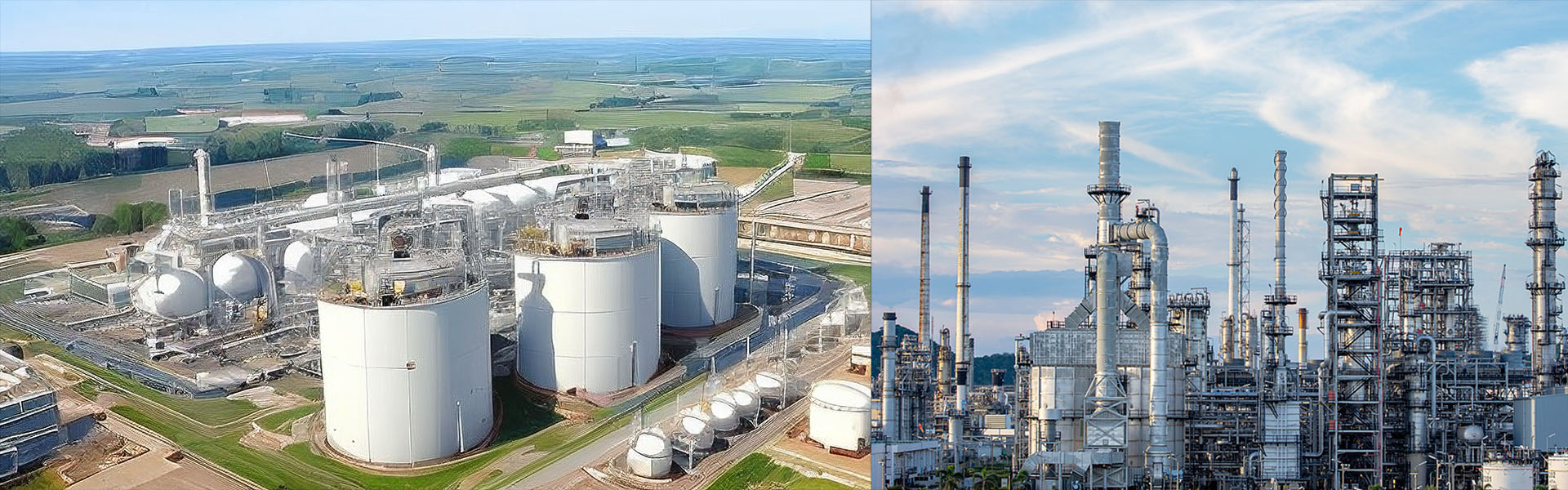
Industrial pipeline heat tracing: Long-distance pipeline freeze protection and insulation in petrochemical and power industries, replacing traditional steam tracing
Storage tank insulation: Wall heat tracing for large oil storage tanks and chemical storage tanks
Building underfloor heating: Radiant heating systems for residential and commercial buildings, with cables embedded in the floor structural layer
Roof and ramp snow melting: Anti-icing and snow removal for roof gutters and driveway ramps in northern regions
Fire pipeline freeze protection: Freeze protection and insulation for fire water pipes in winter
Food and pharmaceuticals: Sanitary heat tracing and insulation for process pipelines
New energy: Pipeline insulation for lithium battery production lines, freeze protection for solar water heating systems
Ship and marine engineering: Marine pipeline heat tracing, freeze protection for offshore platform equipment
Self-regulating type: Can be cut to any length, allows crossing and overlapping winding, high installation flexibility
Constant-power type: Crossing and overlapping are strictly prohibited, cannot be cut at will, and must be laid in full sections according to the designed length
MI type: Bending radius not less than 6 times the outer diameter, dedicated terminal joints required for sealing
Radiant heating: Cable spacing should not be less than 100mm, distance from the inner surface of exterior walls ≥100mm, and each room should preferably have an independent circuit
Cold lead-hot wire joint: Must be connected at the factory using dedicated equipment and processes; simple on-site twisting is strictly prohibited
Grounding requirements: All heating cables must be equipped with a grounding shielding layer to ensure electrical safety
GB/T 20841-2025: Heating cables for life facilities and anti-icing use with rated voltage 300/500V and below (identical to IEC 60800:2021, effective from May 1, 2026)
GB/T 16895.34-2018: Low-voltage electrical installations—Part 7-753: Heating cables and embedded heating systems (identical to IEC 60364-7-753:2014)
IEC 800 (92): General international standard for heating cables
Clarify the application scenario: For pipeline heat tracing, choose self-regulating or constant-power type; for underfloor heating, choose cables dedicated to radiant heating; for high-temperature explosion-proof applications, choose MI type
Determine the temperature grade: Choose low-temperature/medium-temperature/high-temperature type according to maintenance temperature and ambient temperature
Calculate the required power: Calculate the heat loss per unit length according to pipe diameter, insulation layer thickness, ambient temperature, and target maintenance temperature, and match the cable power density
Explosion-proof and corrosion-resistant: Explosion-proof type must be selected for hazardous areas such as petrochemicals, and fluorine-containing sheaths should be selected for corrosive environments
Power supply conditions: Confirm the on-site voltage level; at 220V, the length of a single cable is limited, and long distances require segmented design
Installation conditions: For pipelines with many bends, choose self-regulating type (can cross and overlap); for long straight pipelines, constant-power type can be selected